Need concrete patios in St. Louis?
Send a quick estimate request or ask a question. Tell us about your driveway or patio, and a local provider can follow up with next steps.
No obligation
Request a patio estimate
A new patio is a happy project, and it goes well when you slow down at the start. Before anyone mixes a batch, you can look at the spot, think about size, and pick a finish you will enjoy for years.
Elpeace Concrete is a referral service. We explain your options in plain words, then connect you with independent concrete providers in our network. The providers do the work, not us. They give you the written quote, the schedule and the pour. Our job is to help you ask good questions and feel ready for the next step in St. Louis.
Take a breath. A patio is a happy project, and it goes well when you take it in order. Start with a photo of the spot you have in mind. Pour comes later.
Elpeace Concrete is a referral service. We do not pour concrete. We connect you with independent providers in our network, and they do the work.
In the St. Louis area, the pouring season has edges. Cold winters bring deep frost, and fresh concrete does not like it. Hot, humid summers can dry a slab too fast. Spring rain and flooding can leave a yard soft for weeks.
Many homeowners find that late spring and early fall are easier times to pour. Busy months fill up, so it helps to ask early. Request a callback to check provider availability, or send a request online.
You do not need plans or drawings yet. A few simple notes will do.
Concrete is sturdy and plain to live with. It holds up under a heavy grill, a dining set and a crowd on a summer evening. It does not soften in hot sun. Many frame houses, bungalows and ranch homes have a back door that opens onto a modest yard, and a slab fits that kind of space well.
It also keeps your choices open. You can start simple and add color or pattern in the plan.
Most projects follow the same path. Each provider words it a little differently, so ask to see it in writing.
Think about furniture first. A small table and two chairs need much less room than a grill, a dining set and a fire bowl. Many people find that a little more space than they expect feels better in the end.
Leave walking room around the chairs. Picture someone pushing a chair back from the table. If that chair would land in the grass, size up. A garden hose or chalk laid out on the lawn helps you see the shape before any forms go in.
A broom finish leaves fine lines across the surface. It gives grip when wet and is a common, easy choice for a family yard.
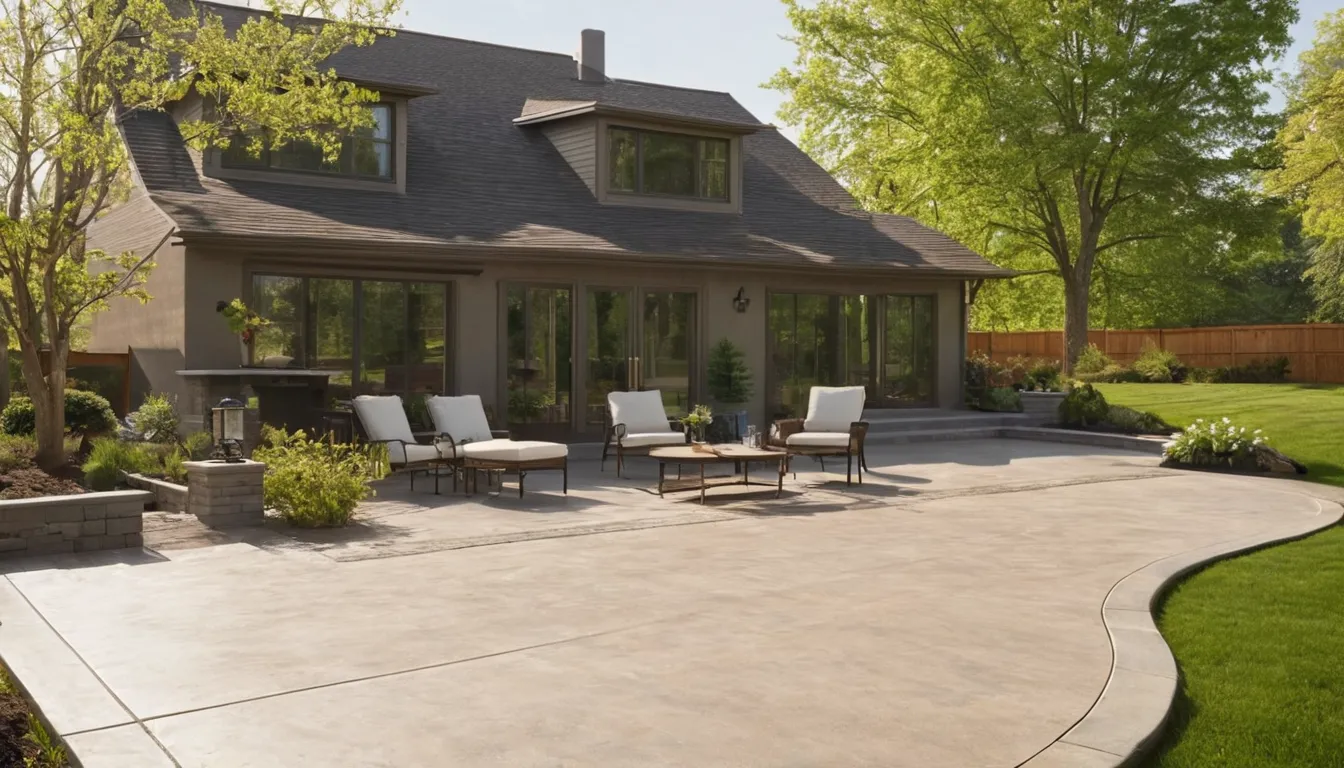
Stamped concrete patios have a pattern pressed into the surface to look like stone, brick or wood. Color is added so the slab does not look flat. This finish costs more and takes more skill, so ask providers for photos of past stamped work. There is a separate page on stamped concrete if you want to go deeper.
A patio should slope gently away from the house. Many providers use about a quarter inch per foot as a rule of thumb. With full basements and sump pumps common in this region, water that runs toward a wall can end up inside. Spring flooding makes this even more important.
Sometimes a yard shows a larger issue, like a cracking wall or soil that sinks near the house. That is a job for foundation repair experts, not a patio crew. A careful provider will point out warning signs and may suggest sorting them out before any slab goes in.
Get at least two written quotes. Compare the same things: size, thickness, base, finish, joints and cleanup. A short quote with little detail is hard to compare. If something is unclear, ask before you sign.
Keep people, pets and furniture off until your provider says the slab is ready. Heavy items take longer. Point sprinklers away from it. If a hard storm or hail is in the forecast, ask the provider how to protect the fresh surface.
Sealing can help protect against water and de-icing salt. Use a plastic shovel on snow. Many providers suggest holding off on salt during the first winter, so ask yours. Each spring, sweep the slab and look for new cracks or pooling water.
This page is about new patio work. If you need concrete driveway repair or a fix for a damaged slab, this service is not the right fit. Other concrete flatwork, like a walkway or a small pad, can often be priced with the same project, so mention it when you ask for a quote.
The provider looks at your yard, marks the outline and notes slope, roots and anything buried below.
Old sod or concrete comes out, gravel goes in and gets packed, and forms hold the shape.
Concrete is placed, leveled and finished with the texture, color or pattern you chose.
Joints are cut, the slab cures, and the work area is cleaned up.
Patio prices vary by size, finish, access and local labor. These are typical U.S. ranges only. Ask each provider for a written quote that lists exactly what is included.
| Item | Typical range | Notes |
|---|---|---|
| Basic broom-finish slab | $6 – $12 per sq ft | Plain gray, standard thickness |
| Stamped and colored slab | $12 – $22 per sq ft | Pattern and color add labor |
| Small patio, about 10 x 10 | $1,200 – $2,500 | Small jobs may have minimum charges |
| Medium patio, about 12 x 16 | $2,000 – $4,500 | Varies by finish and site access |
| Base prep and grading | $1 – $3 per sq ft | Poor soil or slope can raise it |
| Old slab or pavers removal | $2 – $6 per sq ft | Depends on thickness and disposal |
Snap a few pictures of the spot, and jot down the size and how you plan to use it.
Tell us about the project so we can match you with providers.
Look at size, base, finish and drainage in each quote, not just the total.
Choose a provider, agree on timing, and plan around the weather.
We explain the options in simple words so you know what to expect first.
Local providers in our network do the work, and they set their own quotes.
Frost, summer heat, storms and spring rain all shape how and when a patio is poured.
Send a request online and compare written quotes at your own pace, with no obligation.
Send a quick estimate request or ask a question. Tell us about your driveway or patio, and a local provider can follow up with next steps.
Typical U.S. prices run from about $6 to $12 per square foot for plain concrete, and more for stamped or colored work. Size, site access and local labor change the total, so get a written quote.
Many providers say light foot traffic is fine after a day or two, while furniture and heavy items wait longer. Ask your provider for exact timing, since weather and mix can change it.
A common rule of thumb is about a quarter inch of drop per foot, sloping away from the house. This helps rain run off instead of toward your basement. Your provider can confirm what suits your yard.
Send a quick estimate request or ask a question. Tell us about your driveway or patio, and a local provider can follow up with next steps.
No obligation